Other Ways to Say “Just to Confirm”: A Comprehensive Guide
Effective communication involves more than just conveying information; it’s about ensuring that your message is accurately received and understood. The phrase “just to confirm” is commonly used to seek clarification and verify understanding, but relying on it repeatedly can make your language sound monotonous.
This article explores a variety of alternative phrases that you can use to achieve the same goal, adding nuance and sophistication to your communication. Whether you’re writing emails, participating in meetings, or engaging in casual conversations, mastering these alternatives will help you express yourself more clearly and professionally.
This guide is beneficial for English language learners, professionals aiming to refine their communication skills, and anyone seeking to enhance their vocabulary and expressiveness.
Table of Contents
- Introduction
- What Does “Just to Confirm” Really Mean?
- Structural Breakdown of Confirmation Requests
- Types of Alternatives to “Just to Confirm”
- Examples of Alternative Phrases
- Usage Rules and Considerations
- Common Mistakes to Avoid
- Practice Exercises
- Advanced Topics in Confirmation
- Frequently Asked Questions
- Conclusion
What Does “Just to Confirm” Really Mean?
The phrase “just to confirm” is a common idiomatic expression used to verify information, agreements, or understandings. It serves as a polite way to double-check details and ensure that all parties are on the same page.
The primary function of this phrase is to minimize misunderstandings and potential errors by explicitly seeking confirmation before proceeding. It implies a desire for accuracy and a proactive approach to preventing communication breakdowns.
The phrase is typically used at the end of a conversation or a series of instructions, serving as a final confirmation.
In terms of classification, “just to confirm” can be considered a discourse marker or a pragmatic marker because it signals the speaker’s intention to ensure mutual understanding. It doesn’t directly contribute to the propositional content of the sentence but rather guides the listener in interpreting the speaker’s communicative intent.
Its function is primarily interactional, facilitating smoother communication and fostering a sense of shared understanding.
The context in which “just to confirm” is used is typically one where precision and accuracy are important. This could include business meetings, email correspondence, project management discussions, or any situation where a clear understanding is crucial for successful outcomes.
The level of formality can vary depending on the relationship between the speakers, but generally, “just to confirm” is considered relatively neutral and appropriate for most professional settings.

Structural Breakdown of Confirmation Requests
The phrase “just to confirm” typically introduces a request for verification. Structurally, it often precedes a summary of the information that needs to be confirmed or a specific question related to the details discussed.
The basic structure can be broken down as follows:
[Introductory Phrase (“Just to confirm”)] + [Information to be Confirmed/Question]
Let’s look at some examples:
- “Just to confirm, the meeting is scheduled for 2 PM tomorrow?”
- “Just to confirm, you will be sending the documents by Friday?”
- “Just to confirm, the budget for this project is $10,000?”
In these examples, “just to confirm” sets the stage for the actual confirmation request. The information following the phrase is what the speaker wants to verify.
The tone is usually polite and collaborative, aiming to avoid misunderstandings rather than challenging the other person’s accuracy.
The phrase can also be embedded within a longer sentence, although this is less common:
- “So, I understand that we are proceeding with the plan, but just to confirm, are there any remaining concerns?”
Here, “just to confirm” is used to introduce a clarifying question within a broader statement. The placement of the phrase can subtly influence the emphasis of the request.
Types of Alternatives to “Just to Confirm”
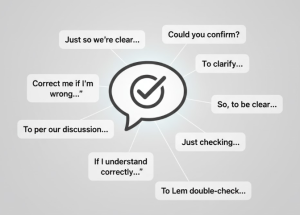
There are many ways to phrase confirmation requests, each with slightly different nuances and levels of formality. Here’s a breakdown of several useful categories:
Direct Questions
Direct questions are straightforward and to the point. They explicitly ask for confirmation without any introductory phrases.
This approach is suitable when you need a clear and concise answer.
Rephrasing Statements as Questions
This involves turning a statement of understanding into a question. This technique is useful for subtly seeking confirmation while also demonstrating that you have been actively listening.
Summarizing and Seeking Agreement
Summarizing involves restating the key points of the discussion and then asking for agreement. This approach is effective for ensuring that everyone has the same understanding of the overall situation.
Using Conditional Clauses
Conditional clauses (using “if,” “provided that,” etc.) can be used to frame a confirmation request in terms of a condition. This can be useful for clarifying dependencies or contingencies.
Employing Tag Questions
Tag questions are short questions added to the end of a statement. They invite agreement and are a less direct way of seeking confirmation.
They can also convey different tones, depending on the intonation.
Formal Alternatives
Formal alternatives are appropriate for professional settings and when communicating with superiors or clients. These phrases tend to be more polite and respectful.
Informal Alternatives
Informal alternatives are suitable for casual conversations with colleagues or friends. These phrases tend to be more relaxed and conversational.
Examples of Alternative Phrases
Below are examples of alternative phrases categorized by the types discussed above. Each category includes a variety of options to suit different contexts and communication styles.
Direct Questions Examples
This section provides a table filled with direct questions that replace “just to confirm.” These questions are straightforward and excellent for situations where clarity is paramount.
| Alternative Phrase | Example Sentence |
|---|---|
| “Am I correct in assuming…?” | Am I correct in assuming that the deadline has been extended? |
| “Is that correct?” | You’re handling the presentation slides, is that correct? |
| “Is my understanding correct?” | Is my understanding correct that we’re postponing the launch until next quarter? |
| “Do I understand correctly?” | Do I understand correctly that you need the report by Friday? |
| “Did I get that right?” | You said the budget is $5000, did I get that right? |
| “Have I understood correctly?” | Have I understood correctly that the changes will be implemented by next week? |
| “So, is it…?” | So, is it the case that we’re not moving forward with the proposal? |
| “Are we in agreement that…?” | Are we in agreement that we will proceed with the marketing campaign next month? |
| “Can you verify that…?” | Can you verify that all the data has been backed up? |
| “Could you confirm…?” | Could you confirm the delivery date, please? |
| “Is it true that…?” | Is it true that the client has approved the design? |
| “So, you’re saying…?” | So, you’re saying the project is on hold? |
| “To be clear, is it…?” | To be clear, is it your intention to resign? |
| “Just checking, is it…?” | Just checking, is it okay if I submit the report tomorrow? |
| “To make sure, is…?” | To make sure, is the meeting at 3 PM? |
| “Confirm, is the date…?” | Confirm, is the date for the conference October 26th? |
| “Do you mean…?” | Do you mean we have to redo the entire analysis? |
| “So, the outcome is…?” | So, the outcome is we’re postponing the decision? |
| “Am I right in thinking…?” | Am I right in thinking that you’re taking over the project? |
| “If I understand correctly…?” | If I understand correctly, you’ll be handling the negotiations? |
| “Did I hear you say…?” | Did I hear you say that you are unavailable next week? |
| “To be certain, is…?” | To be certain, is the payment due on the 15th? |
| “Just double-checking, is…?” | Just double-checking, is the venue confirmed for the event? |
| “To avoid any confusion, is…?” | To avoid any confusion, is the revised budget approved? |
| “So, just to be 100% clear, is…?” | So, just to be 100% clear, is the new policy effective immediately? |
Rephrasing Statements Examples
This table provides examples of rephrased statements designed to elicit confirmation. These are useful when you want to confirm understanding while subtly engaging the other person.
| Alternative Phrase | Example Sentence |
|---|---|
| “So, the deadline is Friday?” | So, the deadline is Friday? |
| “You’re handling the logistics, then?” | You’re handling the logistics, then? |
| “The meeting is at 2 PM?” | The meeting is at 2 PM? |
| “We’re postponing the launch?” | We’re postponing the launch? |
| “You need the report by Friday?” | You need the report by Friday? |
| “The budget is $5000?” | The budget is $5000? |
| “The changes will be implemented by next week?” | The changes will be implemented by next week? |
| “We’re not moving forward with the proposal?” | We’re not moving forward with the proposal? |
| “We will proceed with the marketing campaign next month?” | We will proceed with the marketing campaign next month? |
| “All the data has been backed up?” | All the data has been backed up? |
| “The delivery date is confirmed?” | The delivery date is confirmed? |
| “The client has approved the design?” | The client has approved the design? |
| “The project is on hold?” | The project is on hold? |
| “Your intention is to resign?” | Your intention is to resign? |
| “The meeting is at 3 PM?” | The meeting is at 3 PM? |
| “The conference is October 26th?” | The conference is October 26th? |
| “We have to redo the entire analysis?” | We have to redo the entire analysis? |
| “We’re postponing the decision?” | We’re postponing the decision? |
| “You’re taking over the project?” | You’re taking over the project? |
| “You’ll be handling the negotiations?” | You’ll be handling the negotiations? |
| “You are unavailable next week?” | You are unavailable next week? |
| “The payment is due on the 15th?” | The payment is due on the 15th? |
| “The venue is confirmed for the event?” | The venue is confirmed for the event? |
| “The revised budget is approved?” | The revised budget is approved? |
| “The new policy is effective immediately?” | The new policy is effective immediately? |
Summarizing Examples
This section presents phrases that summarize key points followed by a request for agreement. These are best used after a detailed discussion to ensure everyone is on the same page.
| Alternative Phrase | Example Sentence |
|---|---|
| “So, to recap, we’re moving forward with Plan A. Is that correct?” | So, to recap, we’re moving forward with Plan A. Is that correct? |
| “In summary, you’ll be leading the project and coordinating with the team. Agreed?” | In summary, you’ll be leading the project and coordinating with the team. Agreed? |
| “To summarize, the budget is approved, and we can start the campaign next week. Correct?” | To summarize, the budget is approved, and we can start the campaign next week. Correct? |
| “So, we’ve decided to postpone the meeting until next Friday. Is everyone in agreement?” | So, we’ve decided to postpone the meeting until next Friday. Is everyone in agreement? |
| “To put it briefly, we’re focusing on customer retention this quarter. Does that sound right?” | To put it briefly, we’re focusing on customer retention this quarter. Does that sound right? |
| “In short, the new policy will take effect on January 1st. Is that clear to everyone?” | In short, the new policy will take effect on January 1st. Is that clear to everyone? |
| “So, we’re all clear that the report is due by the end of the week. Yes?” | So, we’re all clear that the report is due by the end of the week. Yes? |
| “To summarize our discussion, we’ll be implementing the changes next month. Are we all aligned?” | To summarize our discussion, we’ll be implementing the changes next month. Are we all aligned? |
| “In conclusion, we’re going ahead with the proposal as planned. Is that right?” | In conclusion, we’re going ahead with the proposal as planned. Is that right? |
| “To recap, the main focus is on improving customer satisfaction. Do we all agree?” | To recap, the main focus is on improving customer satisfaction. Do we all agree? |
| “So, we’re aiming for a launch date in Q3. Is that correct?” | So, we’re aiming for a launch date in Q3. Is that correct? |
| “In summary, we’re cutting costs by 10% across all departments. Agreed?” | In summary, we’re cutting costs by 10% across all departments. Agreed? |
| “To summarize, we’re increasing the marketing budget for the next campaign. Correct?” | To summarize, we’re increasing the marketing budget for the next campaign. Correct? |
| “So, we’ve decided to hire a new project manager. Is everyone in agreement?” | So, we’ve decided to hire a new project manager. Is everyone in agreement? |
| “To put it briefly, we’re expanding our operations to Asia. Does that sound right?” | To put it briefly, we’re expanding our operations to Asia. Does that sound right? |
| “In short, we’re implementing a new performance review system. Is that clear to everyone?” | In short, we’re implementing a new performance review system. Is that clear to everyone? |
| “So, we’re all clear that the deadline is non-negotiable. Yes?” | So, we’re all clear that the deadline is non-negotiable. Yes? |
| “To summarize our discussion, we’ll be launching the product next spring. Are we all aligned?” | To summarize our discussion, we’ll be launching the product next spring. Are we all aligned? |
| “In conclusion, we’re moving the headquarters to Chicago. Is that right?” | In conclusion, we’re moving the headquarters to Chicago. Is that right? |
| “To recap, the primary goal is to increase revenue by 20%. Do we all agree?” | To recap, the primary goal is to increase revenue by 20%. Do we all agree? |
Conditional Clauses Examples
Here are sentences using conditional clauses to seek confirmation, useful for clarifying conditions or dependencies.
| Alternative Phrase | Example Sentence |
|---|---|
| “If I understand correctly, the payment is due upon completion of the project?” | If I understand correctly, the payment is due upon completion of the project? |
| “Provided that the budget is approved, we can proceed with the campaign?” | Provided that the budget is approved, we can proceed with the campaign? |
| “Assuming that all goes according to plan, we’ll launch next month?” | Assuming that all goes according to plan, we’ll launch next month? |
| “In the event that there are any issues, you’ll contact me immediately?” | In the event that there are any issues, you’ll contact me immediately? |
| “On the condition that we meet the deadline, we’ll receive the bonus?” | On the condition that we meet the deadline, we’ll receive the bonus? |
| “If I’m not mistaken, the conference is in October?” | If I’m not mistaken, the conference is in October? |
| “Given that we have all the necessary resources, we can start the project now?” | Given that we have all the necessary resources, we can start the project now? |
| “Supposing that the client approves the design, we’ll move to the next phase?” | Supposing that the client approves the design, we’ll move to the next phase? |
| “If my information is correct, the new policy starts next week?” | If my information is correct, the new policy starts next week? |
| “Unless there are any objections, we’ll proceed as planned?” | Unless there are any objections, we’ll proceed as planned? |
| “If I’m hearing you correctly, we are postponing the event?” | If I’m hearing you correctly, we are postponing the event? |
| “Provided that we get the green light, we’ll start the marketing campaign?” | Provided that we get the green light, we’ll start the marketing campaign? |
| “Assuming that the data is accurate, we can make the decision?” | Assuming that the data is accurate, we can make the decision? |
| “In the event that the system fails, we have a backup plan?” | In the event that the system fails, we have a backup plan? |
| “On the condition that the contract is signed, we’ll start the work?” | On the condition that the contract is signed, we’ll start the work? |
| “If I’m not wrong, the meeting is scheduled for tomorrow?” | If I’m not wrong, the meeting is scheduled for tomorrow? |
| “Given that we have sufficient funds, we can expand our operations?” | Given that we have sufficient funds, we can expand our operations? |
| “Supposing that we get the necessary approvals, we’ll launch the product?” | Supposing that we get the necessary approvals, we’ll launch the product? |
| “If my understanding is right, the report is due next Friday?” | If my understanding is right, the report is due next Friday? |
| “Unless there are any further questions, we can conclude the meeting?” | Unless there are any further questions, we can conclude the meeting? |
Tag Questions Examples
This section provides examples of tag questions, which are short questions added to the end of a statement to invite agreement. These are less direct and can soften the tone.
| Alternative Phrase | Example Sentence |
|---|---|
| “The meeting is at 2 PM, isn’t it?” | The meeting is at 2 PM, isn’t it? |
| “You’re handling the logistics, aren’t you?” | You’re handling the logistics, aren’t you? |
| “The deadline is Friday, right?” | The deadline is Friday, right? |
| “We’re postponing the launch, are we?” | We’re postponing the launch, are we? |
| “You need the report by Friday, don’t you?” | You need the report by Friday, don’t you? |
| “The budget is $5000, is it?” | The budget is $5000, is it? |
| “The changes will be implemented by next week, won’t they?” | The changes will be implemented by next week, won’t they? |
| “We’re not moving forward with the proposal, are we?” | We’re not moving forward with the proposal, are we? |
| “We will proceed with the marketing campaign next month, will we?” | We will proceed with the marketing campaign next month, will we? |
| “All the data has been backed up, hasn’t it?” | All the data has been backed up, hasn’t it? |
| “The delivery date is confirmed, isn’t it?” | The delivery date is confirmed, isn’t it? |
| “The client has approved the design, haven’t they?” | The client has approved the design, haven’t they? |
| “The project is on hold, isn’t it?” | The project is on hold, isn’t it? |
| “Your intention is to resign, is it?” | Your intention is to resign, is it? |
| “The meeting is at 3 PM, right?” | The meeting is at 3 PM, right? |
| “The conference is October 26th, yes?” | The conference is October 26th, yes? |
| “We have to redo the entire analysis, do we?” | We have to redo the entire analysis, do we? |
| “We’re postponing the decision, aren’t we?” | We’re postponing the decision, aren’t we? |
| “You’re taking over the project, are you?” | You’re taking over the project, are you? |
| “You’ll be handling the negotiations, will you?” | You’ll be handling the negotiations, will you? |
Formal Alternatives Examples
This table provides formal alternatives to “just to confirm,” suitable for professional settings and communication with superiors or clients. These phrases are more polite and respectful.
| Alternative Phrase | Example Sentence |
|---|---|
| “I would appreciate it if you could confirm…” | I would appreciate it if you could confirm the delivery date. |
| “Could you please verify…” | Could you please verify the accuracy of the data? |
| “I would be grateful if you could clarify…” | I would be grateful if you could clarify the payment terms. |
| “To ensure my understanding is correct…” | To ensure my understanding is correct, could you reiterate the process? |
| “For the sake of clarity…” | For the sake of clarity, could you confirm the project scope? |
| “To avoid any misunderstanding…” | To avoid any misunderstanding, could you verify the specifications? |
| “I wish to ensure that I have understood correctly…” | I wish to ensure that I have understood correctly the new policy. |
| “It would be helpful if you could confirm…” | It would be helpful if you could confirm the meeting location. |
| “I am seeking clarification on…” | I am seeking clarification on the budget allocation. |
| “Your confirmation of the following would be appreciated…” | Your confirmation of the following would be appreciated: the project timeline. |
Informal Alternatives Examples
Here are informal alternatives to “just to confirm,” suitable for casual conversations with colleagues or friends. These phrases are more relaxed and conversational.
| Alternative Phrase | Example Sentence |
|---|---|
| “Just checking…” | Just checking, the meeting is still on for tomorrow? |
| “Making sure…” | Making sure, you’re bringing the presentation slides? |
| “So, just to be sure…” | So, just to be sure, the deadline is Friday? |
| “Double-checking…” | Double-checking, you got my email? |
| “Just to be clear…” | Just to be clear, we’re still on for lunch? |
| “Am I right in thinking…” | Am I right in thinking you’re taking care of the arrangements? |
| “So, what you’re saying is…” | So, what you’re saying is, we’re postponing the event? |
| “Just making sure we’re on the same page…” | Just making sure we’re on the same page, we’re starting at 9 AM? |
| “Want to make sure I got this right…” | Want to make sure I got this right, the budget is approved? |
| “Just wanted to check in…” | Just wanted to check in, you’ve finished the report? |
Usage Rules and Considerations
When choosing an alternative to “just to confirm,” consider the following:
- Formality: Match the level of formality to the context of the conversation. Use formal alternatives in professional settings and informal alternatives in casual settings.
- Clarity: Ensure that your chosen phrase clearly conveys your intention to seek confirmation. Avoid ambiguous language that could lead to further confusion.
- Tone: Be mindful of the tone conveyed by your chosen phrase. Tag questions, for example, can sound less direct and more conversational, while direct questions are more assertive.
- Audience: Consider your audience and their communication preferences. Some individuals may prefer directness, while others may appreciate a more subtle approach.
- Context: The specific situation and the nature of the information being confirmed should influence your choice of phrase. Use summarizing techniques when confirming multiple points and direct questions when clarifying a single detail.
Avoid using the same alternative repeatedly, as this can become monotonous. Vary your language to keep the conversation engaging and to demonstrate your command of the English language.
Common Mistakes to Avoid
Here are some common mistakes to avoid when seeking confirmation:
- Using ambiguous language: Vague or unclear phrasing can lead to further misunderstandings. Be specific and precise in your confirmation requests.
- Being overly repetitive: Relying on the same phrase repeatedly can make your language sound monotonous and uninspired. Vary your vocabulary to keep the conversation engaging.
- Using the wrong level of formality: Using informal language in a formal setting or vice versa can be inappropriate and unprofessional. Always consider the context and your audience.
- Failing to listen actively: Seeking confirmation is not just about asking questions; it’s also about actively listening to the response and ensuring that you fully understand the information being conveyed.
- Assuming understanding without confirmation: Avoid making assumptions about the other person’s understanding. Always seek explicit confirmation to ensure that everyone is on the same page.
Here are some examples of incorrect usage:
| Incorrect | Correct | Explanation |
|---|---|---|
| “Okay?” (when seeking detailed confirmation) | “So, the budget is $10,000, correct?” | “Okay?” is too vague for a detailed confirmation. |
| “Just to confirm, just to confirm, are we meeting tomorrow?” | “Just to confirm, are we meeting tomorrow?” | Repetition makes the sentence sound awkward. |
| “Yo, you got the report?” (in a formal email) | “Could you please confirm that you have received the report?” | Informal language is inappropriate for a formal setting. |
Practice Exercises
Test your understanding with these practice exercises. Rewrite the sentences using alternative phrases to “just to confirm.”
Exercise 1: Direct Questions
| Question | Your Answer |
|---|---|
| Just to confirm, the meeting is at 10 AM? | |
| Just to confirm, you’re sending the report today? | |
| Just to confirm, the budget is approved? | |
| Just to confirm, we’re postponing the event? | |
| Just to confirm, you need the files by tomorrow? | |
| Just to confirm, the deadline is next week? | |
| Just to confirm, we’re launching the product next month? | |
| Just to confirm, you’re handling the presentation? | |
| Just to confirm, the invoice has been sent? | |
| Just to confirm, the contract is signed? |
Exercise 2: Rephrasing Statements
| Statement | Your Answer |
|---|---|
| Just to confirm, the meeting is at 10 AM. | |
| Just to confirm, you’re sending the report today. | |
| Just to confirm, the budget is approved. | |
| Just to confirm, we’re postponing the event. | |
| Just to confirm, you need the files by tomorrow. | |
| Just to confirm, the deadline is next week. | |
| Just to confirm, we’re launching the product next month. | |
| Just to confirm, you’re handling the presentation. | |
| Just to confirm, the invoice has been sent. | |
| Just to confirm, the contract is signed. |
Exercise 3: Summarizing and Seeking Agreement
| Summary | Your Answer |
|---|---|
| Just to confirm, we’ve agreed to move the meeting to Friday and focus on the budget. | |
| Just to confirm, you’ll be responsible for the marketing campaign and I’ll handle the logistics. | |
| Just to confirm, we’re launching the product in Q3 and aiming for a 20% increase in sales. | |
| Just to confirm, we’re cutting costs by 15% and freezing new hires. | |
| Just to confirm, you’re leading the project and coordinating with the team. |
Exercise 4: Conditional Clauses
| Conditional Statement | Your Answer |
|---|---|
| Just to confirm, if the budget is approved, we can proceed with the project. | |
| Just to confirm, unless there are any objections, we’ll move forward with the plan. | |
| Just to confirm, provided that we meet the deadline, we’ll receive the bonus. | |
| Just to confirm, assuming that the data is accurate, we can make the decision. | |
| Just to confirm, if I understand correctly, the payment is due upon completion of the project. |
Exercise 5: Tag Questions
| Statement | Your Answer |
|---|---|
| Just to confirm, the meeting is at 10 AM. | |
| Just to confirm, you’re sending the report today. | |
| Just to confirm, the budget is approved. | |
| Just to confirm, we’re postponing the event. | |
| Just to confirm, you need the files by tomorrow. |
Answer Key:
Exercise 1: Direct Questions
- Is the meeting at 10 AM?
- Are you sending the report today?
- Is the budget approved?
- Are we postponing the event?
- Do you need the files by tomorrow?
- Is the deadline next week?
- Are we launching the product next month?
- Are you handling the presentation?
- Has the invoice been sent?
- Is the contract signed?
Exercise 2: Rephrasing Statements
- So, the meeting is at 10 AM?
- You’re sending the report today?
- The budget is approved?
- We’re postponing the event?
- You need the files by tomorrow?
- The deadline is next week?
- We’re launching the product next month?
- You’re handling the presentation?
- The invoice has been sent?
- The contract is signed?
Exercise 3: Summarizing and Seeking Agreement
- So, we’ve agreed to move the meeting to Friday and focus on the budget, correct?
- In summary, you’ll be responsible for the marketing campaign and I’ll handle the logistics, agreed?
- To summarize, we’re launching the product in Q3 and aiming for a 20% increase in sales, is that right?
- In short, we’re cutting costs by 15% and freezing new hires, yes?
- To recap, you’re leading the project and coordinating with the team, are we all aligned?
Exercise 4: Conditional Clauses
- If the budget is approved, can we proceed with the project?
- Unless there are any objections, shall we move forward with the plan?
- On the condition that we meet the deadline, will we receive the bonus?
- Assuming that the data is accurate, can we make the decision then?
- If I understand correctly, is the payment due upon completion of the project?
Exercise 5: Tag Questions
- The meeting is at 10 AM, isn’t it?
- You’re sending the report today, aren’t you?
- The budget is approved, is it?
- We’re postponing the event, are we?
- You need the files by tomorrow, don’t you?
Advanced Topics in Confirmation
Beyond basic alternatives, advanced communication involves understanding the nuances of confirmation in various contexts. Here are some advanced topics to consider:
- Cultural Sensitivity: Different cultures have varying communication styles. Some cultures value directness, while others prefer indirectness. Be mindful of these differences when seeking confirmation, especially in international business settings.
- Non-Verbal Cues: Pay attention to non-verbal cues, such as body language and tone of voice, when seeking or providing confirmation. These cues can provide additional context and help you gauge the other person’s true understanding.
- Confirmation in Written Communication: In written communication, clarity is even more critical. Use clear and concise language, and consider using bullet points or numbered lists to summarize key points.
- Confirmation in Crisis Communication: During a crisis, accurate and timely confirmation is essential. Establish clear communication channels and protocols to ensure that information is verified and disseminated effectively.
- Using Technology for Confirmation: Utilize technology tools, such as email read receipts, project management software, and collaboration platforms, to track and confirm the receipt and understanding of information.
Frequently Asked Questions
Is “just to confirm” always necessary?
No, “just to confirm” is not always necessary. Use it judiciously when you need to verify important information or ensure mutual understanding.
Overusing it can make your language sound repetitive.
What if someone responds negatively to my confirmation request?
If someone responds negatively to your confirmation request, take the opportunity to clarify any misunderstandings and address any concerns they may have. Be open to adjusting your understanding based on their feedback.
How can I improve my active listening skills?
To improve your active listening skills, focus on giving the speaker your full attention, avoiding interruptions, asking clarifying questions, and summarizing key points to ensure understanding.
Are there any situations where I should avoid seeking confirmation?
In some situations, seeking confirmation may be unnecessary or even insulting. For example, if you have complete trust in the other person’s reliability, or if the information being confirmed is trivial, it may be better to avoid seeking confirmation.
How can I make my confirmation requests more polite?
To make your confirmation requests more polite, use phrases such as “I would appreciate it if you could confirm…” or “Could you please verify…” and always express gratitude for their time and assistance.
Conclusion
Mastering alternatives to “just to confirm” is a valuable skill that can enhance your communication and improve your relationships, both personally and professionally. By understanding the different types of confirmation requests, considering the context and audience, and avoiding common mistakes, you can express yourself more clearly, confidently, and effectively.
Practice these alternatives regularly, and you’ll soon find yourself communicating with greater precision and impact.