

Cupcakes, those delightful miniature cakes, evoke feelings of joy and indulgence. But how do we effectively communicate their appeal through language?
The key lies in mastering the art of using adjectives. Adjectives are descriptive words that add detail and color to our language, allowing us to paint a vivid picture of these sweet treats.
Understanding how to use adjectives correctly is crucial not only for food writing but also for enhancing overall communication skills in English. This article explores the various types of adjectives, their correct usage, and common pitfalls to avoid, ensuring you can describe cupcakes with precision and flair.
Whether you’re a budding baker, a food blogger, or simply an English language enthusiast, this guide will equip you with the necessary tools to elevate your descriptive vocabulary.
Table of Contents
- Introduction
- What are Adjectives?
- Classification of Adjectives
- Function of Adjectives
- Contexts for Using Adjectives
- Structural Breakdown of Adjectives
- Positioning of Adjectives
- Cumulative Adjectives
- Coordinate Adjectives
- Types of Adjectives for Cupcakes
- Descriptive Adjectives
- Flavor Adjectives
- Texture Adjectives
- Appearance Adjectives
- Evaluative Adjectives
- Examples of Adjectives for Cupcakes
- Descriptive Adjective Examples
- Flavor Adjective Examples
- Texture Adjective Examples
- Appearance Adjective Examples
- Evaluative Adjective Examples
- Usage Rules for Adjectives
- The Order of Adjectives
- Adjectives and Articles
- Comparative and Superlative Forms
- Common Mistakes with Adjectives
- Misplaced Adjectives
- Overuse of Adjectives
- Incorrect Comparative/Superlative Forms
- Practice Exercises
- Exercise 1: Identifying Adjectives
- Exercise 2: Ordering Adjectives
- Exercise 3: Using Comparative and Superlative Adjectives
- Advanced Topics
- Adjectival Participles
- Compound Adjectives
- Limiting Adjectives
- Frequently Asked Questions
- Conclusion
What are Adjectives?
Adjectives are words that describe or modify nouns (people, places, things, or ideas) and pronouns. They provide additional information about the noun, making the description more specific and vivid.
Adjectives answer questions like “What kind?”, “Which one?”, “How many?”, or “How much?” They are essential for creating detailed and engaging descriptions in writing and speech. Without adjectives, our language would be bland and lack the necessary nuances to convey precise meaning.
Classification of Adjectives
Adjectives can be classified into several categories based on their function and meaning. Some key types include descriptive adjectives (which describe the qualities of a noun), quantitative adjectives (which indicate quantity), demonstrative adjectives (which point out specific nouns), possessive adjectives (which show ownership), and interrogative adjectives (which ask questions about nouns).
Understanding these classifications can help you choose the most appropriate adjective for a given context.
Function of Adjectives
The primary function of an adjective is to modify a noun or pronoun. This modification can involve describing a quality, specifying a characteristic, or limiting the noun in some way.
Adjectives add depth and detail to sentences, making them more informative and engaging. They help the reader or listener visualize the noun being described.
For example, instead of simply saying “cupcake,” you could say “delicious chocolate cupcake,” providing much more information.
Contexts for Using Adjectives
Adjectives are used in a wide variety of contexts, from everyday conversation to formal writing. They are particularly important in descriptive writing, where the goal is to create a vivid and detailed image in the reader’s mind.
In the context of cupcakes, adjectives can be used to describe their flavor, texture, appearance, and overall quality. They are also crucial in marketing and advertising, where the goal is to persuade potential customers to purchase the product.
Structural Breakdown of Adjectives
Understanding the structure of adjectives involves recognizing how they are positioned in a sentence and how multiple adjectives can be used together. The placement of adjectives can affect the meaning and flow of a sentence.
Additionally, the rules governing the order of multiple adjectives are important for clear and effective communication.
Positioning of Adjectives
Adjectives typically appear before the noun they modify (e.g., “a sweet cupcake”). However, they can also follow a linking verb (such as is, are, was, were, seems, appears, becomes) to describe the subject of the sentence (e.g., “The cupcake is delicious“). This is known as a predicate adjective. The correct positioning of adjectives is crucial for grammatical accuracy and clarity.
Cumulative Adjectives
Cumulative adjectives each modify the noun directly, building upon each other. They are not separated by commas and have a specific order that follows general rules (opinion, size, age, shape, color, origin, material, purpose). For example, “a delicious small fresh cupcake” follows this order. Each adjective adds a layer of description that narrows down the specific cupcake being referred to.
Coordinate Adjectives
Coordinate adjectives are adjectives that modify the same noun equally. They are separated by commas or the word “and.” The order of coordinate adjectives is more flexible than that of cumulative adjectives. For example, “a rich, moist cupcake” uses coordinate adjectives to describe the cupcake’s qualities. You could also say “a moist and rich cupcake” without changing the meaning.
Types of Adjectives for Cupcakes
When describing cupcakes, certain types of adjectives are particularly useful. These include adjectives that describe flavor, texture, appearance, and overall quality.
By using a variety of these adjectives, you can create a comprehensive and appealing description of a cupcake.
Descriptive Adjectives
Descriptive adjectives provide general information about the cupcake, such as its size, shape, or origin. Examples include “small,” “large,” “round,” “homemade,” and “classic.” These adjectives help to create a basic picture of the cupcake in the reader’s mind.
Flavor Adjectives
Flavor adjectives describe the taste of the cupcake. Examples include “chocolate,” “vanilla,” “strawberry,” “minty,” “caramel,” “sweet,” “bitter,” and “tangy.” These adjectives are essential for conveying the culinary experience of eating the cupcake.
Texture Adjectives
Texture adjectives describe the feel of the cupcake in the mouth. Examples include “moist,” “fluffy,” “crumbly,” “smooth,” “chewy,” “light,” and “dense.” These adjectives add another dimension to the description, appealing to the sense of touch.
Appearance Adjectives
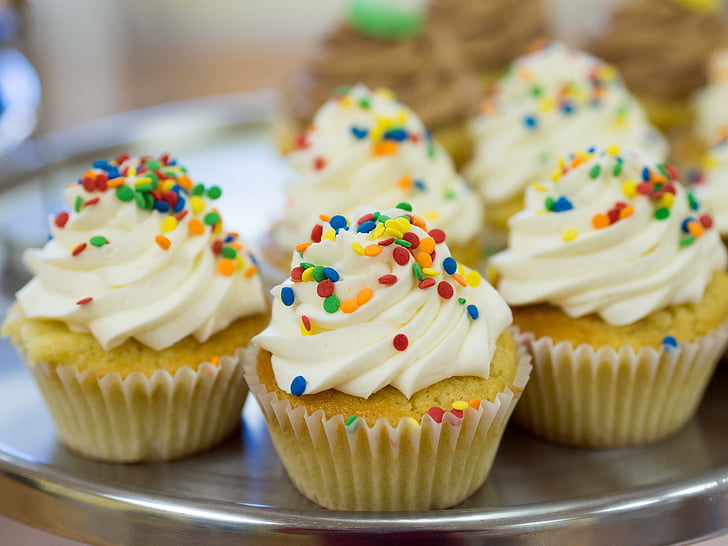
Appearance adjectives describe how the cupcake looks. Examples include “colorful,” “frosted,” “decorated,” “pretty,” “elegant,” “golden,” and “shiny.” These adjectives are important for attracting attention and creating a visual appeal.
Evaluative Adjectives
Evaluative adjectives express an opinion or judgment about the cupcake. Examples include “delicious,” “amazing,” “wonderful,” “tasty,” “perfect,” and “disgusting.” These adjectives convey the speaker’s or writer’s personal feelings about the cupcake.
Examples of Adjectives for Cupcakes
To illustrate the different types of adjectives used to describe cupcakes, let’s look at some comprehensive example tables. Each table will focus on a specific category of adjectives, providing a wide range of options to enhance your descriptive vocabulary.
Descriptive Adjective Examples
This table showcases various descriptive adjectives that can be used to provide general information about cupcakes, such as their size, shape, origin, or style.
| Adjective | Example Sentence |
|---|---|
| Small | She ate a small cupcake after lunch. |
| Large | He ordered a large cupcake for dessert. |
| Mini | The bakery sells mini cupcakes for parties. |
| Round | The round cupcake was topped with sprinkles. |
| Homemade | The homemade cupcakes tasted better than store-bought ones. |
| Classic | She always orders the classic vanilla cupcake. |
| Gourmet | The gourmet cupcakes were made with exotic ingredients. |
| Vegan | They offered vegan cupcakes for those with dietary restrictions. |
| Gluten-free | The gluten-free cupcakes were surprisingly delicious. |
| Organic | She prefers to buy organic cupcakes from the farmer’s market. |
| American | The American cupcake was rich and decadent. |
| Traditional | The traditional cupcakes were made with a family recipe. |
| Modern | The modern cupcakes featured unique flavor combinations. |
| Decadent | The decadent cupcake was filled with chocolate ganache. |
| Simple | The simple cupcake was perfect for a light snack. |
| Elaborate | The elaborate cupcakes were adorned with intricate decorations. |
| Single-layer | The single-layer cupcake was easy to eat. |
| Multi-layered | The multi-layered cupcake was a visual masterpiece. |
| Unfrosted | The unfrosted cupcake was a healthier option. |
| Buttery | The buttery cupcake had a rich flavor. |
| Iced | The iced cupcake was perfect for a party. |
| Sprinkled | The sprinkled cupcake was a kid’s favorite. |
| Filled | The filled cupcake had a surprise inside. |
| Empty | The empty cupcake tin was a sad sight. |
| Extra | The extra cupcake was a treat. |
| First | The first cupcake was the best. |
| Second | The second cupcake was even better than the first. |
Flavor Adjective Examples
This table provides a variety of flavor adjectives to help you describe the taste of cupcakes, from common flavors to more exotic combinations.
| Adjective | Example Sentence |
|---|---|
| Chocolate | The chocolate cupcake was rich and fudgy. |
| Vanilla | The vanilla cupcake had a delicate flavor. |
| Strawberry | The strawberry cupcake was topped with fresh berries. |
| Minty | The minty cupcake was refreshing. |
| Caramel | The caramel cupcake was drizzled with sauce. |
| Sweet | The sweet cupcake was a sugary delight. |
| Bitter | The bitter chocolate cupcake was for adults. |
| Tangy | The tangy lemon cupcake was zesty. |
| Fruity | The fruity cupcake was filled with jam. |
| Nutty | The nutty cupcake was sprinkled with almonds. |
| Spicy | The spicy cupcake had a kick. |
| Salty | The salty caramel cupcake was a great combination. |
| Lemon | The lemon cupcake was light and refreshing. |
| Coffee | The coffee cupcake was perfect for breakfast. |
| Maple | The maple cupcake was topped with bacon. |
| Red velvet | The red velvet cupcake was a classic choice. |
| Coconut | The coconut cupcake was filled with cream. |
| Peanut butter | The peanut butter cupcake was a treat. |
| Oreo | The Oreo cupcake was a cookies and cream delight. |
| Cinnamon | The cinnamon cupcake was warm and spicy. |
| Banana | The banana cupcake was moist and flavorful. |
| Lime | The lime cupcake was refreshing and tangy. |
| Raspberry | The raspberry cupcake was filled with a sweet jam. |
| Blueberry | The blueberry cupcake was delicious with a hint of lemon. |
| Pumpkin spice | The pumpkin spice cupcake was perfect for fall. |
| Salted caramel | The salted caramel cupcake was a delicious treat. |
| Chocolate fudge | The chocolate fudge cupcake was rich and decadent. |
Texture Adjective Examples
This table lists adjectives that describe the texture of cupcakes, helping you convey how they feel in the mouth, from moist and fluffy to dense and chewy.
| Adjective | Example Sentence |
|---|---|
| Moist | The moist cupcake melted in my mouth. |
| Fluffy | The fluffy cupcake was light and airy. |
| Crumbly | The crumbly cupcake fell apart easily. |
| Smooth | The smooth frosting was a delight. |
| Chewy | The chewy cupcake was surprisingly good. |
| Light | The light cupcake was perfect for a snack. |
| Dense | The dense cupcake was very filling. |
| Soft | The soft cupcake was easy to eat. |
| Tender | The tender cupcake was baked to perfection. |
| Creamy | The creamy frosting was addictive. |
| Fudgy | The fudgy cupcake was rich and decadent. |
| Cakey | The cakey cupcake had a light texture. |
| Silky | The silky ganache topped the cupcake. |
| Velvety | The velvety cupcake was smooth and rich. |
| Airy | The airy cupcake was light as a feather. |
| Rich | The rich cupcake was full of flavor. |
| Delicate | The delicate cupcake had a fine crumb. |
| Firm | The firm cupcake held its shape well. |
| Springy | The springy cupcake bounced back when pressed. |
| Tough | The tough cupcake was difficult to chew. |
| Gooey | The gooey cupcake was filled with caramel. |
| Crispy | The crispy cupcake had a delightful topping. |
| Flaky | The flaky cupcake had a buttery crust. |
| Cheesecake-like | The cheesecake-like cupcake had a smooth texture. |
| Dry | The dry cupcake needed some frosting. |
| Soggy | The soggy cupcake was not appealing. |
| Hard | The hard cupcake was difficult to bite into. |
Appearance Adjective Examples
This table offers adjectives to describe the visual appeal of cupcakes, from their colors and decorations to their overall presentation.
| Adjective | Example Sentence |
|---|---|
| Colorful | The colorful cupcakes were decorated with rainbow sprinkles. |
| Frosted | The frosted cupcake looked delicious. |
| Decorated | The decorated cupcakes were perfect for the party. |
| Pretty | The pretty cupcakes were arranged on a platter. |
| Elegant | The elegant cupcakes were adorned with edible flowers. |
| Golden | The golden cupcake shimmered under the light. |
| Shiny | The shiny glaze made the cupcake look irresistible. |
| Bright | The bright cupcakes caught everyone’s eye. |
| Dark | The dark chocolate cupcake looked rich and decadent. |
| White | The white frosting contrasted beautifully with the cupcake. |
| Pink | The pink cupcake was perfect for a girl’s birthday. |
| Blue | The blue cupcake was decorated with ocean-themed details. |
| Green | The green cupcake was made for St. Patrick’s Day. |
| Red | The red velvet cupcake was a classic choice. |
| Purple | The purple cupcake was decorated with lavender frosting. |
| Ornate | The ornate cupcakes were a work of art. |
| Simple | The simple cupcake had a minimalist design. |
| Tall | The tall cupcake was piled high with frosting. |
| Short | The short cupcake was easy to eat. |
| Layered | The layered cupcake had multiple flavors. |
| Swirled | The swirled frosting looked beautiful on the cupcake. |
| Glittery | The glittery sprinkles added sparkle to the cupcake. |
| Polished | The polished presentation made the cupcake look perfect. |
| Hand-crafted | The hand-crafted cupcake showed attention to detail. |
| Neat | The neat frosting made the cupcake look professional. |
| Messy | The messy frosting added to the cupcake’s charm. |
| Perfect | The perfect cupcake was a visual masterpiece. |
Evaluative Adjective Examples
This table offers adjectives that express opinions or judgments about cupcakes, helping you convey your personal feelings about their taste and quality.
| Adjective | Example Sentence |
|---|---|
| Delicious | The delicious cupcake was the best I’ve ever had. |
| Amazing | The amazing cupcake was a true culinary masterpiece. |
| Wonderful | The wonderful cupcake made my day. |
| Tasty | The tasty cupcake was a delightful treat. |
| Perfect | The perfect cupcake was everything I wanted. |
| Excellent | The excellent cupcake was made with high-quality ingredients. |
| Superb | The superb cupcake was a testament to the baker’s skill. |
| Fantastic | The fantastic cupcake was incredibly flavorful. |
| Incredible | The incredible cupcake was unforgettable. |
| Exquisite | The exquisite cupcake was a work of art. |
| Divine | The divine cupcake was heavenly. |
| Mouthwatering | The mouthwatering cupcake made me want more. |
| Irresistible | The irresistible cupcake was impossible to resist. |
| Delightful | The delightful cupcake was a joy to eat. |
| Satisfying | The satisfying cupcake was the perfect ending to the meal. |
| Pleasant | The pleasant cupcake was a nice surprise. |
| Enjoyable | The enjoyable cupcake was a treat to savor. |
| Appetizing | The appetizing cupcake looked as good as it tasted. |
| Gross | The gross cupcake was not appealing. |
| Disgusting | The disgusting cupcake was inedible. |
| Awful | The awful cupcake was a waste of money. |
| Terrible | The terrible cupcake was poorly made. |
| Bad | The bad cupcake was disappointing. |
| Unpleasant | The unpleasant cupcake had a strange taste. |
| Mediocre | The mediocre cupcake was nothing special. |
| Ordinary | The ordinary cupcake was nothing to write home about. |
Usage Rules for Adjectives
To use adjectives effectively, it’s important to understand the rules governing their usage, including the order of adjectives, their relationship with articles, and the formation of comparative and superlative forms.
The Order of Adjectives
When using multiple adjectives before a noun, there is a general order that should be followed to ensure clarity and natural-sounding language. The typical order is: opinion, size, age, shape, color, origin, material, purpose. For example, “a delicious small new round blue cupcake” follows this order.
Adjectives and Articles
Adjectives often appear with articles (a, an, the) before the noun. The choice of article depends on whether the noun is specific or general, and whether the adjective begins with a vowel sound or a consonant sound. For example, “a delicious cupcake” (general) versus “the delicious cupcake” (specific).
Comparative and Superlative Forms
Adjectives can be used to compare two or more things. The comparative form is used to compare two things (e.g., “This cupcake is sweeter than that one”). The superlative form is used to compare three or more things (e.g., “This is the sweetest cupcake I’ve ever tasted”). For most short adjectives, the comparative form is created by adding “-er” and the superlative form by adding “-est.” For longer adjectives, “more” and “most” are used (e.g., “more delicious,” “most delicious”).
Common Mistakes with Adjectives
Even experienced English speakers sometimes make mistakes with adjectives. Some common errors include misplaced adjectives, overuse of adjectives, and incorrect comparative/superlative forms.
Being aware of these pitfalls can help you avoid them.
Misplaced Adjectives
A misplaced adjective is one that is positioned in a sentence in such a way that it modifies the wrong noun or pronoun, leading to confusion or unintended humor. For example, “I ate a cupcake on the table that was delicious” implies that only the table was delicious, not the cupcake.
The correct sentence would be “I ate a delicious cupcake on the table.”
Overuse of Adjectives
Using too many adjectives in a sentence can make the writing sound cluttered and unnatural. It’s important to choose adjectives carefully and only use those that add significant value to the description. Instead of saying “a very delicious, moist, and rich cupcake,” you could simply say “a delicious cupcake.”
Incorrect Comparative/Superlative Forms
Using the wrong comparative or superlative form of an adjective is a common mistake. Remember to use “-er” and “-est” for most short adjectives, and “more” and “most” for longer adjectives.
Avoid using both forms together, such as “more sweeter” or “most sweetest,” which are grammatically incorrect.
Practice Exercises
To solidify your understanding of adjectives, here are some practice exercises. Each exercise focuses on a different aspect of adjective usage, from identifying adjectives to ordering them correctly and using comparative and superlative forms.
Exercise 1: Identifying Adjectives
Instructions: Identify the adjectives in the following sentences.
| Question | Answer |
|---|---|
| 1. The chocolate cupcake was delicious. | chocolate, delicious |
| 2. She ate a small, fluffy cupcake. | small, fluffy |
| 3. He prefers vanilla cupcakes. | vanilla |
| 4. The decorated cupcakes looked pretty. | decorated, pretty |
| 5. They bought organic cupcakes from the market. | organic |
| 6. The minty cupcake was refreshing. | Minty |
| 7. This is the best cupcake I’ve ever had. | best |
| 8. She made a homemade cupcake. | Homemade |
| 9. The cupcake was moist and tasty. | Moist, tasty |
| 10. We ordered two large cupcakes. | large |
Exercise 2: Ordering Adjectives
Instructions: Rearrange the adjectives in the correct order.
| Question | Answer |
|---|---|
| 1. a cupcake delicious small (a ________ cupcake) | a delicious small cupcake |
| 2. round new blue a cupcake (a ________ cupcake) | a new round blue cupcake |
| 3. tasty big chocolate a (a ________ cupcake) | a tasty big chocolate cupcake |
| 4. cupcake homemade a small (a ________ cupcake) | a small homemade cupcake |
| 5. red velvet delightful a (a ________ cupcake) | a delightful red velvet cupcake |
| 6. moist chocolate delicious (a ________ cupcake) | a delicious moist chocolate cupcake |
| 7. gourmet a small round (a ________ cupcake) | a small round gourmet cupcake |
| 8. sweet vanilla classic (a ________ cupcake) | a classic sweet vanilla cupcake |
| 9. big decorated pretty (a ________ cupcake) | a pretty big decorated cupcake |
| 10. minty refreshing small (a ________ cupcake) | a refreshing small minty cupcake |
Exercise 3: Using Comparative and Superlative Adjectives
Instructions: Fill in the blanks with the correct comparative or superlative form of the adjective in parentheses.
| Question | Answer |
|---|---|
| 1. This cupcake is (sweet) _______ than that one. | sweeter |
| 2. This is the (delicious) _______ cupcake I’ve ever tasted. | most delicious |
| 3. Which cupcake is (large), this one or that one? | larger |
| 4. This is the (good) _______ cupcake in the bakery. | best |
| 5. The chocolate cupcake is (rich) _______ than the vanilla one. | richer |
| 6. This cupcake is (moist) _______ than the others. | more moist |
| 7. Of all the cupcakes, this one is the (pretty). | prettiest |
| 8. This cupcake is (tasty) _______ than I expected. | tastier |
| 9. She made the (colorful) _______ cupcakes for the party. | most colorful |
| 10. The (small) _______ cupcake was perfect for a quick snack. | smallest |
Advanced Topics
For advanced learners, there are several more complex aspects of adjective usage to explore, including adjectival participles, compound adjectives, and limiting adjectives.
Adjectival
Participles
Adjectival participles are verb forms that function as adjectives. They can be either present participles (ending in “-ing”) or past participles (usually ending in “-ed” or “-en”). For example, “frosting cupcakes” (present participle) or “decorated cupcakes” (past participle). These participles add a dynamic quality to the description, indicating an action or state of being.
Compound Adjectives
Compound adjectives are formed by combining two or more words, often with a hyphen. They act as a single adjective modifying a noun. For example, “chocolate-covered cupcake” or “three-layered cupcake.” These adjectives provide a concise and specific description, often combining multiple qualities into one.
Limiting Adjectives
Limiting adjectives narrow down the noun they modify, indicating quantity, possession, or demonstrating which specific noun is being referred to. Examples include “few cupcakes,” “my cupcake,” or “this cupcake.” These adjectives are essential for precise communication, helping to avoid ambiguity and specify the exact noun being discussed.
Frequently Asked Questions
This section addresses some frequently asked questions about adjectives, providing further clarification and practical advice.
What is the difference between an adjective and an adverb?
Adjectives modify nouns and pronouns, while adverbs modify verbs, adjectives, or other adverbs. For example, “a delicious cupcake” (adjective modifying the noun “cupcake”) versus “she ate the cupcake quickly” (adverb modifying the verb “ate”).
Can a noun be used as an adjective?
Yes, nouns can sometimes function as adjectives, known as attributive nouns. For example, “chocolate cupcake” (the noun “chocolate” is used as an adjective to describe the type of cupcake).
How can I improve my use of adjectives?
To improve your use of adjectives, practice reading widely and paying attention to the adjectives that authors use. Try to incorporate a variety of adjectives into your writing and speaking, and be mindful of the order of adjectives and the potential for overuse.
Are there any adjectives that should be avoided?
While there are no inherently “bad” adjectives, it’s important to avoid using clichés or overly generic adjectives that don’t add much value to the description. Choose adjectives that are specific, vivid, and appropriate for the context.
How do I choose the right adjective for a particular situation?
Consider the specific qualities you want to highlight and choose adjectives that accurately convey those qualities. Think about the flavor, texture, appearance, and overall quality of the cupcake, and select adjectives that appeal to the senses and create a vivid image in the reader’s mind.
Conclusion
Mastering the use of adjectives is essential for creating vivid and engaging descriptions of cupcakes, as well as for enhancing overall communication skills in English. By understanding the different types of adjectives, their correct usage, and common pitfalls to avoid, you can elevate your descriptive vocabulary and communicate with greater precision and flair.
Whether you’re a baker, a food blogger, or simply an English language enthusiast, the knowledge and skills gained from this guide will empower you to describe cupcakes in a way that is both informative and appealing. So go ahead, indulge in the delightful world of adjectives, and let your words paint a delicious picture!